
Welcome, Strings2u is conveniently located next to Wolli Creek Train Station at CHISHOLM STREET, SYDNEY.
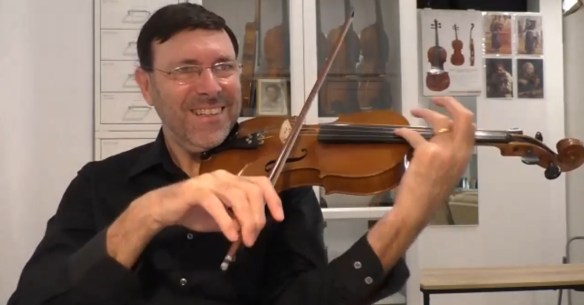
VIOLIN LESSONS OR VIOLA LESSONS are available ON SITE at Wolli Creek or ONLINE with Zoom meetings.
To book a $20 TRIAL LESSON please CONTACT Peter at strings2u2@gmail.com or 0477885377 👍🎻😁 If Overseas please call +61477885377.
TEACHING HOURS: are Wednesday 3-8pm, Thursday 3-8pm, Saturday 12-7pm.
MAP of the STRINGS2U LOCATION at Chisholm Street, Wolli Creek 2205, Sydney.

ONLINE ZOOM LESSON TIMES AVAILABLE: please email Peter at strings2u2@gmail.com or sms at 0477885377 to arrange.
TRIAL LESSONS: Please ask for a Trial lesson for $20 beforehand
– I can supply a violin or viola for the lesson if needed. Also, I sell all sizes of new affordable beginner and intermediate violins which I personally set up to be easy to play and sounding their best.
WHAT AGES DO I TEACH? age 4 to forever.
MONTHLY LESSON FEES:
For Beginners/Suzuki Bk1/Grade 1 only:
- $200 a Month for 4 lessons of 30 minutes each OR ONLINE for 45 minutes.
- $270 a Month for 4 lessons of 45 minutes each OR ONLINE for 60 minutes.
- $320 a Month for 4 lessons of 60 minutes each OR ONLINE for 75 minutes.
- Please see below regarding Suzuki Bk2 and Grade 2 and higher.
SCHEDULE OF LESSON FEES:
| MONTHLY FEE (4 LESSONS) | 30 Mins | 45 Mins | 60 Mins | |
| LEVEL 1: | Fiddletime 1; Suzuki Bk1; AMEB Preliminary Exam | $200 (online is: 45min) | $270 (online is: 60min) | $320 |
| LEVEL 2: | Fiddletime 2; Suzuki Bk2; Exam Grade 1 | $220 (online is: 30min) | $280 (online is: 45min) | $340 |
| LEVEL 3: | Suzuki Bk3&4; Exam Grade 2 | $240 | $300 | $360 |
| LEVEL 4: | Suzuki Bk5&6; Exam Grade 3&4 | $260 | $320 | $380 |
| LEVEL 5: | Suzuki Bk7&8; Exam Grade 5&6 | $280 | $340 | $400 |
| LEVEL 6: | Suzuki Bk9&10; Exam Grade 7&8 | $300 | $360 | $420 |
| FOR ONE LESSON: LESSON BY LESSON BASIS | 30 Minutes | 45 Minutes | 60 Minutes |
| AT WOLLI CREEK | Level 1 $55 Level 2 $60 Level 3 $65 Level 4 $70 | Level 1 $75 Level 2 $80 Level 3 $85 Level 4 $90 | Level 1 $90 Level 2 $95 Level 3 $100 Level 4 $110 |
WHAT I TEACH:
VIOLIN:
-CLASSICAL - with optional Exams in AMEB or ABRSM and SUZUKI Violin
-POP SONGS, MOVIE THEMES, LINDSAY STIRLING Pieces
-GYPSY JAZZ VIOLIN with pieces by Stephane Grappelli
-IMPROVISATION techniques with the use of Looper pedals
-FIDDLE for IRISH folk or AMERICAN folk
SUMMARY OF THE VIOLIN CURRICULUM
BEGINNERS-LEVEL 1: (equivalent to AMEB Preliminary Exam)
To learn basic music reading, I use the book “Fiddle Time Joggers” as a fun book with music accompaniment. This book gives ten pieces to learn open strings, then another ten pieces to learn first finger, then second finger then third finger. Another book called “The ABCs of Violin, Book 1” is also used for its well known pieces.
Material Used for Violin Lessons:
-“Fiddle Time Joggers” and “The ABCs of Violin Book 1,” “Abracadabra,” “Eta Cohen.”
-Movie Themes and Pop Songs are introduced once third finger can be used in “Joggers.”
-Classical Pieces in Suzuki Book 1 is also introduced at this time from piece 1 to 15.
-Movie Themes, Pop Songs, Game Music etc., are again used to help motivate students to learn the new keys.
Technique Learned: The scales and arpeggios in the keys of D Major-one octave, A Major-one octave and G Major-one octave; Bowing strokes: detache, staccato and slurred legato, pizzicato.
INTERMEDIATE: LEVEL 2 (equivalent to AMEB Grade 1) Material used:
-“Fiddle Time Runners” is used to play G Major and A Major on all strings. Also, C Major is introduced. This involves changing the position of the second and third finger.
-“The ABCs of Violin Book 2,” “Abracadabra,” and “Eta Cohen.”
-Movie Themes and Pop Songs etc
-Classical repertoire from Suzuki Books 1 pieces 16-17 and Suzuki Book 2
-past and current Exam Pieces from A.M.E.B., A.B.R.S.M and Trinity.
Technique Learned: The scales and arpeggios in the keys of G Major: 2 octaves, G natural minor: one octave, A Major: 2 octaves, A natural minor: one octave, C Major and F Major: one octave; Bowing strokes: slurred staccato, martele, octave harmonics, double stops.
INTERMEDIATE: LEVEL 3 (equivalent to AMEB Grade 2) Material used:
-“Fiddle Time Sprinters,” “Abracadabra,” “Eta Cohen.”
-Movie Themes and Pop Songs etc.
-Classical repertoire from Suzuki Books 3 and 4
-“Solos for Young Violinists” Vol.1-6
-past and current Exam Pieces from A.M.E.B., A.B.R.S.M and Trinity.
Technique Learned: The scales and arpeggios in the keys of D Major: 2 octaves, D melodic minor: 2 Octaves, D harmonic minor: 1 Octave, Bb Major: 2 octaves, D melodic minor: 2 Octaves, D harmonic minor: 1 Octave. Chromatic scale on the A string. Third Position shifts with the same finger. Fingered Double Stops. Bowing strokes: tremolo, hook strokes, colle.
ADVANCED: LEVEL 4 (equivalent to AMEB Grade 3 and 4) Material used:
-“Fiddle Time Sprinters.”
-Movie Themes and Pop Songs
-Classical repertoire from Suzuki Books 5 and 6
-“Violin Pieces the Whole World Plays”
-“Solos for Young Violinists” Vol.1-6
-past and current Exam Pieces from A.M.E.B., A.B.R.S.M and Trinity.
Technique Learned:
The scales and arpeggios in the keys of: Two Octave Major: B, C, Ab, E; Three Octave Major: G. Two Octave Melodic minor: B, C, E; Three Octave Melodic minor: G. Two Octave Harmonic minor: B, C, E; Three Octave Harmonic minor: G. Two Octave Diminished seventh and Dominant seventh: G. Two Octave Chromatic Scale: G. Double Stops: Sixths and Thirds and Octaves. 3rd Position Shifting with the same finger. Playing in 2nd Position and 4th Position. Vibrato. Bowing: Spiccato, Hook Stroke and Tremolo.
ADVANCED: LEVEL 5 (equivalent to AMEB Grade 5 and 6) Material used:
-Classical repertoire from Suzuki Books 7 and 8
-“Violin Pieces the Whole World Plays”
-“Solos for Young Violinists” Vol.1-6
-past and current Exam Pieces from A.M.E.B., A.B.R.S.M and Trinity.
Technique Learned:
The scales and arpeggios in the keys of:
Two Octave Major: Eb, F; Three Octave Major: A, Bb, C, D. Two Octave Melodic minor: Eb, F; Three Octave Melodic minor: A, C, D. Two Octave Harmonic minor: Eb, F; Three Octave Harmonic minor: Bb, C, D. Two Octave Diminished seventh and Dominant seventh: A, Bb, C, D. Two Octave Chromatic Scale: A, Bb, C, D. Double Stops: Sixths: A, Bb, D; Thirds: A, C. Octaves: A, Bb, C, D. 3rd Position Shifting with the same finger. Playing in 4th and 5th Position. Vibrato. Bowing: Up Bow Staccato; Ricochet, Spiccato and Sautille.
ADVANCED: LEVEL 6 (equivalent to AMEB Grade 7 and 8) Material used:
-Classical repertoire from Suzuki Books 9 and 10
-“Violin Pieces the Whole World Plays”
-“Solos for Young Violinists” Vol.1-6
-past and current Exam Pieces from A.M.E.B., A.B.R.S.M and Trinity.
Technique Learned:
The scales and arpeggios in the keys of:
Three Octave Major: Ab, E, B, Eb. Four Octave Major: G. Three Octave Melodic minor: Ab, E, B, Eb. Three Octave Harmonic minor: Ab, E, B, Eb. Two Octave Diminished seventh and Dominant seventh: Ab, E, B, Eb. Double Stops: Sixths: Ab, E, G, G Harmonic minor; Thirds: Ab, E, G, G Harmonic minor. Octaves: Ab, Em, D, G, G Melodic minor; Fourths: D. 3rd Position Shifting with the same finger. Playing in 6th and 7th Position. Vibrato. Bowing: Up Bow Staccato; Ricochet, Spiccato and Sautille, Pizzicato to Arco.
ABOUT THE FIDDLE TIME BOOKS:
I use the Bk1: “Joggers,” Bk2 “Runners: and Bk3 “Sprinters” as:
– they have a mix of different styles of popular, folk, fiddle tunes, and classical
– they are easy to learn, while the student is taught the techniques for how to play in tune (left hand) and how to produce a good tone (right hand).
– they have an accompaniment CD which helps the student to learn the melody and enjoy playing at home
– they are proven to work well for all students who love learning the violin or viola.
– they allow for students (4 yrs and above) to learn to READ MUSIC in an easy and methodical way as the pieces start with just open string notes for 10 pieces: G string and D string then A string and E string (or for viola: C string and G string then D string and A string). Following this we learn 1st finger notes on all strings for 10 pieces; then we learn 2nd finger for 11 pieces. Finally, we learn 3rd and 4th fingers for 16 pieces and can play and read music using all the fingers in the keys of G, A and D Major (for viola the keys of C, D and A Major).
After 9 months learning Book 1 Fiddle Time Joggers, the student is ready for Book 2 Fiddle Time Runners. At this time, they also start to learn the Suzuki Book 1 repertoire.
I. ABOUT THE VIOLIN/VIOLA TEACHER and LESSONS: All lessons are given by me personally. I hold a Bachelor of Education in Music, with over 21 years’ experience teaching music and violin in Sydney, Australia, K.L. and Singapore.
• LESSONS for CHILDREN aged 5 years and above; I’m a parent myself and teaching children is something I love to do. Also, I encourage a parent/guardian to attend the lesson so they can assist the student with their daily practice.
• LESSONS for ADULTS: around half of my students are teenagers or working adults. Adults actually learn the violin much faster than most children. What adults lack in time, they make up for in motivation and disciplined regular practice.
• MUSICAL STYLES TAUGHT:
– CLASSICAL: Suzuki Method & A.M.E.B. & A.B.R.S.M. Examinations are offered (see below). The student can choose what music they want to learn. Some students prefer to work through the Suzuki repertoire while some prefer to mostly play Examination pieces. Others want a mix of classical together with pop and folk music.
– OTHERS: POP/BLUES/American FOLK/IRISH FIDDLE music:
For Irish fiddle music involves: a) learning some standard tunes under the categories of jigs, reels, hornpipes, polkas, marches, airs, waltzes, strathspeys; b) learning common bowing patterns and articulation; c) learning common embellishments to the melody; d) learning some pentatonic improvisation techniques; e) optional Irish music jam session with other musicians once you know some of the tunes well enough to join in.
I recommend “The Session Tunebook Collection” for Irish and Scottish Fiddle.
For American fiddle music, I use “The American Fiddle Method” Book 1 and 2, and Hal Leonard’s “Fiddle Method Book 1.” They both come with a CD/mp3s to help to learn the music.
• MY QUALIFICATIONS: Bachelor of Education in Music, specializing in SUZUKI Violin Method.
• EXPERIENCE: I’m experienced teaching Violin and Music Theory for 21 years in Australia, Malaysia and Singapore. My Performance experience includes playing in orchestra, chamber groups, Irish fiddle, Australian bush, American folk and violin for recording studios. As well as teaching the violin I have taught High School Music in Sydney for ten years.
• ENQUIRIES to: Peter at strings2u2@gmail.com (NOT strings2u@gmail.com).
II. ABOUT THE SUZUKI VIOLIN METHOD
The Suzuki Violin Method really works for all ages. It has a superior methodology for both technique (how to play) and repertoire (the music played) in the Suzuki books. What a lot of parents do not know is that the Suzuki method actually accredits its teachers where they must have lessons from a “master teacher” for several years. This enables consistency in technique, teaching methodology and student progress. I have been privileged to study under Suzuki master teachers Harold Brissenden, Nada Brissenden and Marjorie Hystek.
Suzuki Violin Method teachers are specialized in their training to teach young children from the age of 3 years and above. While I have much success teaching adults, the Suzuki Violin Method has enabled me to successfully teach violin to young children also.
WHO SHOULD LEARN THE VIOLIN? Anyone who loves the sound of the violin. With the technique that I teach, anyone can learn to play the violin by producing 1. a good sound; and 2. playing in tune. The pieces for beginners are easy and enjoyable to learn. My students like the music books that I use as they have a range of different styles with interesting accompaniments recorded on a practice CD. It makes it easier to practice daily as the music is fun to play and only requires 15 minutes daily to ensure success and weekly progress.
III. MY TEACHING METHOD:
Like most violin players, I am the result of my own teacher’s instruction. I have had several teachers over the years who have taught me how to play the violin. That only made me a good violin player.
On the other hand, 40 years ago I was blessed to have learnt from a Master Suzuki violin teacher – Marjorie Hystek, who taught me how to teach the violin. That has made me not only a good violin player but a good violin teacher.
For the Suzuki Violin Method in Australia, all violin teachers who are qualified by the Suzuki Talent Education Association must study under a Master Teacher to learn how to teach the Suzuki repertoire as well as Dr. Suzuki’s teaching methodology.
Motivation is very important for the study of the violin to make learning rewarding and progress assured. I am careful to pace the lesson to work on the following areas each lesson depending on the students receptivity and interest.
1. Intonation-Playing in tune (the left hand). Many players who come to me have never been taught how to play in tune consistently.
2. Tonalization-how to produce a good sound (the right hand-the bow). Again, this area is very weak with most violinists. It is easy to improve when the bow grip and bow stroke is done well.
3. Repertoire-each week students learn new pieces with different styles and enjoy their practice with the use of accompaniment CD’s. We also steadily work through the Suzuki Violin books which represent the standard classical violin repertoire.
PLEASE LEAVE A QUESTION or COMMENT BELOW: If you would like to know more you can leave a question below/call my handphone 0477885377 / email me at strings2u2@gmail.com (not strings2u@gmail.com). I look forward to hearing from you. Thanks for reading, Peter
 Strings2u
Hi Peter,
I have very limited experience with musical instrument (keyboard about 20 years ago) but would like to start and learn to play viola. Would it be possible to arrange a trial lesson some time next week? Thank you!
Best Regards,
Cora