Unknown's avatar

About Strings2u

Violin Seller and Violin Teacher

Bowing Strokes – Sautille

Sautille sounds like the bow is bouncing on the string but it does not leave the string. It is played at the balance point of the bow with the use of the wrist and fingers and a very small shoulder joint movement.

Where is the balance point? Just find the place on your bow where it will balance on your finger. It can be found approximately one third of the length of the bow from the frog. Because the bow is balanced it is very easy to move at the balance point and will have a natural springiness.

Exercise:

 = 144

detache musicSautillé Instructions

  1. Repeat each note 8 times
  2. Find the “sweet spot” where the bow bounces by itself.
  3. this bow stroke sounds off but is really on the string. The stick bounces but the hair never leaves the string.
  4. If it is not working try these four ways to fix it.
    1. Hold the bow with the index and ring finger (and the thumb) and throw the bow.
    2. Lower your shoulder and raise the elbow slightly, 3-4 inches.
    3. make sure your motion is up and down and not sideways.
    4. you may be in the wrong spot for the speed you are attempting. Try changing the speed or the spot of the bow.

Important Tips:

  • Start on the string at the balance point which is one third of the length of the bow away from the frog.
  • Keep bow hair flat.
  • Find the “sweet spot” by moving the bow up or down by 1/2 inch segments.
  • Work on getting a consistent sound.

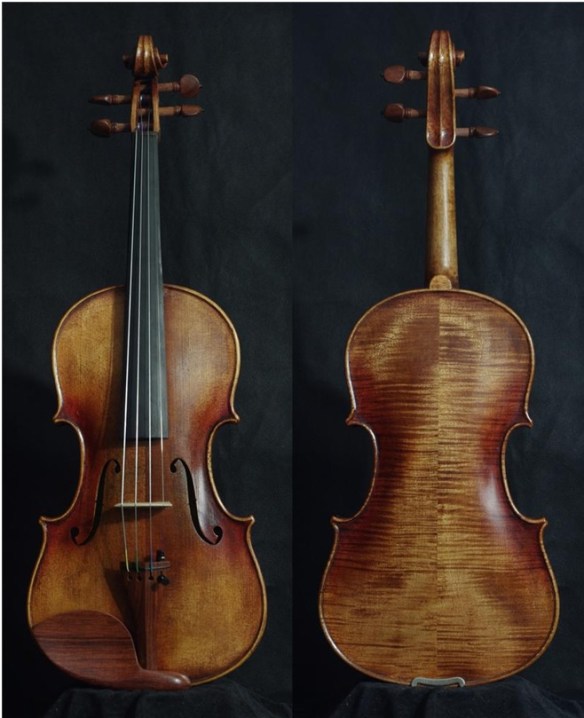
SN:218 S$1890-Copy of Joseph Guarneri Del Gesu Violin of the year 1730

(SN:218 S$1890) Master Violin-Copy of Joseph Guarneri Del Gesu Violin of the year 1730-Russian Spruce aged 20yrs.

The Construction and Materials of this Violin:

  • · Vanish:      Italian antique varnished
  • · Top:            Excellence Aged Russian spruce dried for 20 years
  • · Back:          Selected Seasoned Flamed Maple Back dried for 15years
  • · Fitting:      Ebony  or rosewood fitting
  • · Fingerboard:  Advance Ebony
  • · Soundpost:     European spruce
  • · String:       Synthetic string
  • · Bridge:      France Aubert bridge
  • · Purfling:  Hand inlay

The Dimensions of the violin are:

– body length: 355mm

– lower bout: 208mm

– upper bout: 168mm

– middle: 115mm.

118-Joyee-Guarneri-1730-210413-frontbackfull 118-Joyee-Guarneri-1730-210413-sides 118-Joyee-Guarneri-1730-210413-back&sides


ABOUT JOSEPH  

GUARNERI DEL GESU: Giuseppe Guarneri del Gesu ranks today as one of the two greatest violin makers of all time, although the marked difference between the appearance and sound of his instruments and those of  Stradivari makes comparison almost impossible. Some simply prefer Stradivari, and some (notably Paganini) prefer del Gesu.

Giuseppe trained with his father, Giuseppe Guarneri filius Andreaand assisted him from about 1714 until 1722. In that year he left his father’s house to get married, and seems to have forsaken violin making for a few years. The earliest known instruments that are entirely his own work date from the late 1720s, but it was not until 1731 that he began to insert the label with the monogram IHS (‘Iesus Hominem Salvator’: ‘Jesus Saviour of Man’), which gave rise to his nickname ‘del Gesu’. He seems to have been strongly influenced by the Brescian school, and his work combines the best of the Cremonese tradition with the stretched C-bouts and exaggerated f-holes of Maggini and da Salo. Tonally, his instruments retain much of the sweetness of a Stradivari, but have a seemingly unlimited depth and darkness of sound, irrespective of the pressure of the bow. He reached his pinnacle as a craftsman in the mid-1730s, and produced some ravishingly beautiful instruments, such as the “King Joseph” of 1737. However, it is the later instruments that have come to represent all that is characteristic of del Gesu — the unbridled creativity, the astonishing disregard for the details of workmanship, and the sheer daring of design and construction that are the natural conclusion of the deeply ingrained individuality of the Guarneri family. The rapid spread of del Gesu’s fame in the mid-19th century was largely due to the patronage of Paganini, who played the “Cannon” of 1743 for most of his career.  (excerpted from Four Centuries of Violin Making by Tim Ingles.)

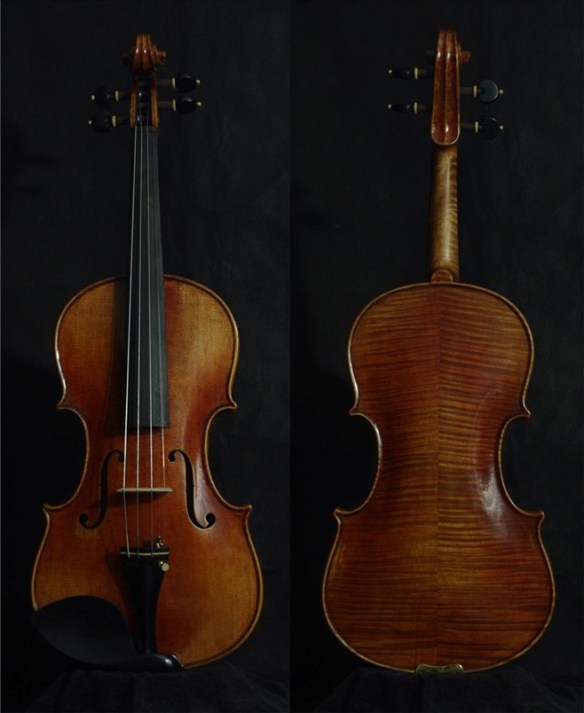
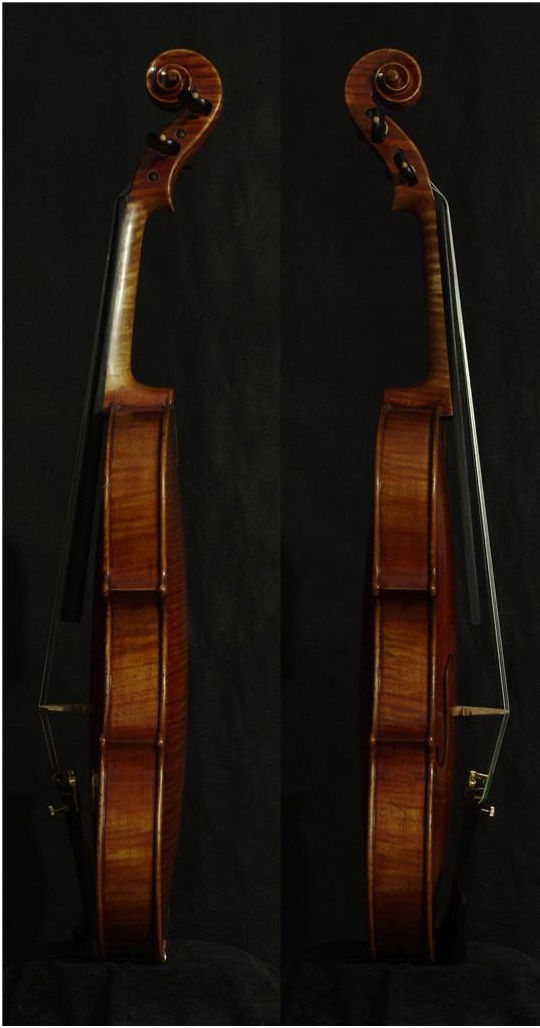
SN:215-Copy of Nicolaus Amati Violin from the year 1670-description and photos

(SN:215 S$1890) Master Violin-Copy of Nicolaus Amati Violin of the year 1670-Russian Spruce aged 20yrs

THIS VIOLIN is a copy of Nicolaus Amati’s ‘Grand Pattern’ violin, which is slightly larger than the models designed by his father and grandfather. Today, these larger instruments, measuring about 35.6 cm. in body length, are particularly well-regarded by professional violinists because they produce a larger sound, more suited to modern concert halls, than the smaller models, which are still ideal for small chamber settings.

115-Amati-1670-front back full 115-Amati-1670-sides


ABOUT

NICOLAUS AMATI: Nicolaus was also known as Nicolo. His father Girolamo perished in the plague in 1630, as did many other violin makers including Nicolo’s main rival to the North, Giovanni Paulo Maggini of Brescia. At the same time, the demand for instruments of the violin family was growing, and Nicolo — still unmarried and childless — was, for the first time in the Amati family, forced take in outsiders as apprentices.

Starting in the early 1630s, Nicolo trained a succession of makers who would go on to expand violin-making in Cremona and throughout Italy. These included Andrea Guarneri, the first of the Guarneri family of makers and Giacomo Gennaro. While there is no documentary evidence that either Francesco Ruggieri or Antonio Stradivari worked in the Amati shop, it’s clear that they studied Nicolo’s instruments intently and attempted to duplicate his models and working methods. The same can be said of Jacob Stainer in Absam.

Finally in 1649, at the age of 54, Nicolo sired his first son, whom he named Girolamo in honor of his father. When Nicolo died in 1684, at the age of 88, Girolamo II inherited the shop and attempted to maintain the Amati supremacy, but with much less success than his ancestors.

Nicolo is considered by many to be one of the finest craftsmen in the history of violin making. Virtually all of his instruments are made with unerring precision and attention to detail. Nicolo is also famous for introducing the so-called ‘Grand Pattern’ violin, slightly larger than the models designed by his father and grandfather. Today, these larger instruments, measuring about 35.6 cm. in body length, are particularly well-regarded by professional violinists because they produce a larger sound, more suited to modern concert halls, than the smaller models, which are still ideal for small chamber settings.

The construction

  • · Vanish:             Italian antique varnished 
  • · Top:                   Excellence Aged Russian spruce dried for 20 years 
  • · Back:                 Selected Seasoned Flamed Maple Back dried for 15years 
  • · Fitting:             Ebony  or Rosewood fitting
  • · Fingerboard: Ebony 
  • · Soundpost:    European spruce 
  • · String:             Synthetic string
  • · Bridge:            Aubert bridge
  • · Purfling:        Hand inlay

The Dimensions of the violin as:

–  body length:355mm

–  lower bout: 206mm

–  upper bout:166mm

–  middle: 117mm.

Original Stradivari and Guarneri Violins Information

INFORMATION ON SOME ORIGINAL STRADIVARI AND GUARNERI VIOLINS

Antonio Stradivari produced 1,116 instruments of which 960 were violins. Around 650 instruments survived, including 450 to 512 violins.

Arranged alphabetically below is some information on the following Stradivarius violins: the “Cremonese.”  the “Lady Blunt,” the “Messiah,” the “Soil,” the “Vieuxtemps,” and the “Viotti.” Also, two Guarneri del Gesu violins are included: the “Cannon” and the “Lord Wilton.”

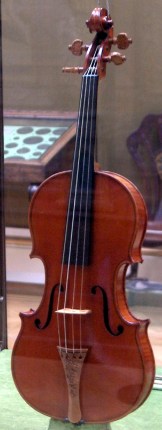
THE CANNON GUARNERI – made in 1743 – played by Paganini

Bartolomeo_giuseppe_guarneri,_violino_cannone,_appartenuto_a_niccolò_paganini,_cremona_1743

“The Cannon” violin is also known by the variants Il Cannone del GesùCannone or Canon, and is often appended with the maker’s name “Guarneri del Gesù.” The violin received its name as the Cannon from a former owner, the Italian violin virtuoso Niccolo Paganini (1782–1840), because of its power and resonance. Paganini called it “my cannon violin,” referring to the explosive sound that he was able to make it produce. This is considered one of Guarneri’s masterpieces. The violin has distinct features that set it apart from modern instruments, including a slightly shorter and thicker sound box and a markedly curved neck. Its tone is distinctly bright, yet full. The violin has survived intact and whole and was given by Paganini to the city of Genoa. Body length 35.4cm., Upper Bout 16.8 cm., Center Bout 11.1 cm, Lower Bout 20.7 cm.

Photo of Il Cannone Guarnerius on exhibit at Palazzo Doria Tursi, Genova, Italy. Photo Attribution: Sailko [CC BY-SA 3.0 (https://creativecommons.org/licenses/by-sa/3.0)%5D

THE CREMONESE STRADIVARIUS – made in 1715

The Cremonese violin is one of Stradivari’s greatest masterpieces made during his Golden Period. The Cremonese was once owned by the famous violinist, Joseph Joachim. It was returned permanently to the Italian city of Cremona in 1961. The choice of wood, pattern, arching, varnish and sound is proof of Stradivari’s genius. This instrument has inspired some of the greatest makers in history and continues to be an inspiration today. The Cremonese is unique in the way it combines the sweetness and grandeur of a good Strad, while having the depth of a fine del Gesu. Body length 35.7cm., Upper Bout 16.8cm., Center Bout 11.2 cm, Lower Bout 20.75 cm.

THE LADY BLUNT STRADIVARIUS – made in 1721

Lady_Blunt_Stradivari-topThe Lady Blunt Stradivarius violin of 1721 is named after its first known owner Lady Anne Blunt, daughter of  Ada Lovelace, granddaughter of Lord Byron. The Lady Blunt is one of the two best-preserved Stradivarius violins in existence. It has survived in near-original condition since it has resided mostly in the hands of collectors and seen little use. The Lady Blunt was sold by Tarisio Auctions on their 20 June 2011 online auction for £9.8 million (US$15.9 million), more than four times the previous auction record for a Stradivarius, held by the Molitor. The proceeds will go to the Nippon Foundation’s Northeastern Japan Earthquake and Tsunami Relief Fund.

Attribution: Tarisio Auctions.Violachick68 at English Wikipedia [CC BY-SA 3.0 (https://creativecommons.org/licenses/by-sa/3.0)%5D

THE MESSIAH STRADIVARIUS – made in 1716

Messiah_StradivariusThe Messiah is considered the greatest surviving Stradivari violin by most leading experts. Thickness graduation maps of the “Messiah” violin show similar characteristics to those of the Betts (1704), Cremonese (1715), Tuscan-Medici (1716), and other Golden Age Stradivarius violins. Top plates are generally thin (2-3 mm), with the thickest areas (3-4 mm) occurring between the c-bouts and the f-holes. Back plates have a central concentric zone of greatest thickness (4-5 mm), in which the center of thickness lies distinctly left of the centerline in the Cremonese, Tuscan-Medici, and Kashininov violins. The thickness pattern on the back of the Messiah violin is almost identical to that of the Cremonese violin, including asymmetrical center of thickness points located more than 30 mm left of center. Body length 35.5 cm., Upper Bout 16.75 cm., Center Bout 10.83 cm, Lower Bout 20.8 cm.

Attribution: © Pruneau / Wikimedia Commons


THE SOIL STRADIVARIUS – made in 1714 – played by Menuhin and Perlman

No other Stradivari has had as much experience on the concert platform as this violin. The Soil has a strikingly handsome appearance. It would be difficult to find maple wood with more extravagant figure, illuminated by Stradivari’s greatest varnish. The provenance of this violin includes the French luthier and collector Jean-Baptiste Vuillaume .The Soil was acquired by Yehudi Menuhin in 1950 and in 1986 by Itzhak Perlman. In the opinion of many, this is the greatest sounding Stradivari of them all. Body length 35.8 cm., Upper Bout 16.8cm., Lower Bout 20.8 cm.

LORD WILTON GUARNERI DEL GESU – made in 1742 – played by Menuhin

Considered a masterpiece, the Lord Wilton was constructed during del Gesu’s latter years. This instrument was in the possession of the great violinist Yehudi Menuhin and would become his favorite violin to play in public. A letter from Menuhin in 1974 tells how he preferred the tone of his Guarneri over that of his Stradivari violin. Guarneri used deeply rippled, beautifully figured maple for the back, neck and scroll. While the maple is typically used by Guarneri in his latter years, the spruce used for the top is from the same stock he had at his disposal in his early years. The oddly cut, extended sound holes and freely cut scroll expresses the master’s extravagant style. As with many of the violins by del Gesu, the Lord Wilton possesses great tone and reponse. Body length 35.2cm., Upper Bout 16.8 cm., Center Bout 11.2 cm, Lower Bout 20.6 cm.

THE VIEUXTEMPS STRADIVARIUS VIOLIN – made in 1709:

The Vieuxtemps Stradivarius violin has a body length of 357mm and upper and lower bouts of 168mm and 208mm respectively. It is among the fullest, broadest violins that Stradivari ever built. The choice, highly figured maple on the back recalls the wood used in other violins of the period including the King Maximilian and Scotta violins, both of 1709, and the Ries of 1710. Stradivari often made heads of less figured wood than on his backs, presumably for ease of carving, but the head and the ribs of the Viuextemps violin are all made of highly figured wood that matches that of the back. The spruce for the top of the violin is also extremely fine and the front, sides and head of the violin are all covered with the finest possible varnish of a fiery red color on a brilliant ground coat. The tone of the 1710 Vieuxtemps violin is nothing less than thrilling. There is reserve power in every range; indeed there are no problem notes and no discernable weaknesses save for a wolf-note on C natural on the G-string. The whole violin, and especially the E-string invites seemingly limitless colors and beauty of tone. The response of the violin is fast and even as long as one is playing close to the bridge.

THE VIOTTI STRADIVARIUS VIOLIN – made in 1709:

This violin is one of the best masterpieces made by Stradivari during his golden period. If the “Messiah” is preserved in a superior condition, then we can say that the “Viotti” is in a very good condition. Besides the wonderful craftsmanship, the wood is superior and the ruby-like varnish also makes this violin incomparable. In France, the Viotti was admired and highly sought after among the instrument makers of the era, most notably Jean-Baptiste Vuillaume. The first biography of Stradivari, authored by Francois Fetis, explained the unparalleled quality of his instruments and contained a list of the best examples, placing the Viotti third.

ELECTRIC VIOLINS Available Now

Featured

ELECTRIC VIOLINS:                  (Click here to go back to “New Violins”)

Do you want to PRACTICE LATE AT NIGHT? Well now you can practice anytime, anywhere using the S$390 to $450 SILENT ELECTRIC VIOLIN or almost new Fender FV1 electric violin for $690 (usual retail of S$1177). The silent violin is solid so it makes very little sound. You listen through headphones which are provided for the Solid Electric Violins. All models include a case, bow, rosin, and lead.

All Silent Solid Electric Violins come with the following accessories:

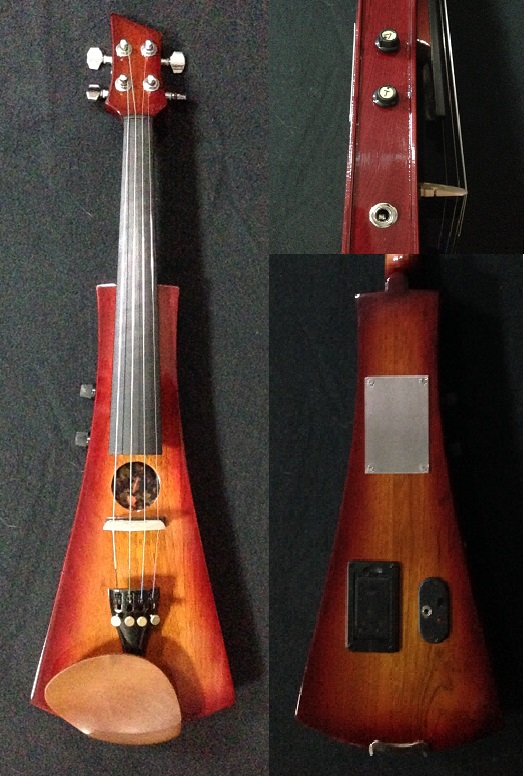
– Available Strings2u Model EV1:SOLID for $450: with headphones and a large 1/4 inch output for  a more dependable connection to a speaker. It features three controls on top: volume, treble and bass. Also, it comes with 5 strings to play both viola and violin music.

ELV4-big-small-frontback

 Available Strings2u Model EV2:SOLID for $390: with headphones and a large 1/4 inch output for  a more dependable connection to a speaker. It features two controls on the left side: volume and tone.

ELV5-big-small-frontback

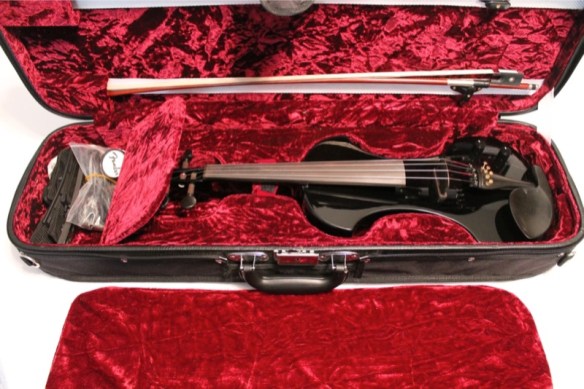
-Available: almost new Fender FV1 electric violin for $690 (usual retail of S$1177): the Fender FV1 electric violin comes in its original case (hard case with soft-style exterior, lined in plush velvet fabric and velvet blanket) with bow, shoulder rest, headphones, rosin and straps. This electric violin has an excellent sound which can be controlled by the easy to access volume and tone controls to the right of the bridge. It is a very well-reviewed violin coming in a stunning gloss black finish.

EV-Fender-FV1-ElectricViolin-case&violin

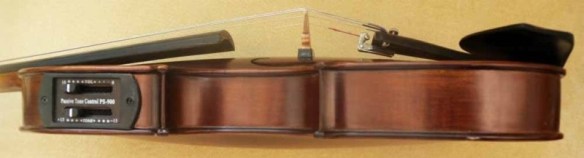
-Available Strings2u Model EV:HOLLOW for $390:  If you want a normal acoustic violin that you can plug in to play with a band through a speaker or P.A. We have available a normal acoustic violin which has been fitted with a pickup under the bridge and on the side it has controls for tone and volume and a 1/4 inch output for a lead. Also, it comes with 5 strings to play both viola and violin music. This model does not have a headphone output so it does not require a 9 volt battery.

VIOLIN MULTI-EFFECTS PROCESSOR for S$150: An electric violin really sounds best when it is run through an effects processor. This is because an electric violin can tend to sound too “scratchy” or bright.  The Multi-Effects Processor will WARM UP and SMOOTHEN OUT the sound.

This $150 MULTI-EFFECTS PROCESSOR is small enough to fit on your pants belt or strap. Here is what it can do: It will output to a 1/4″ normal guitar lead and also has a HEADPHONE OUTPUT. There are 40 DRUM patterns built in to play along to. The EFFECTS that are included are EQ, REVERB, DELAY, CHORUS/ FLANGER/ PHASER/ TREMELO, DISTORTION/ OVERDRIVE/ CRUNCH/ FUZZ/ METAL. It has a TUNER, TONE and VOLUME controls and it is powered by two AAA batteries or an adaptor which is included. Also, it is small (12.8cm x 8.4cm x 4.5cm) and light (160g) and clips on your belt or strap. You listen through headphones which are provided. If interested, please call Peter on +65 96611413 and photos will be sent to you.

China made violins selling under non-Chinese labels

Violin students are often surprised that well-known labels can actually be selling violins which are China-made. This comes as no surprise to those who are in the violin trade, as it is a trade secret that other countries can no longer compete with China on price and value for money. This is simply because violin making is labour intensive.

According to an article at stringsmagazine.com there are well known violin labels which specify that some of their models are made in China:  Stentor Music Co. Ltd. Conservatoire; Saga Musical Instruments Cremona SV-220; Horn & Son Theo Kreutz; Angel CA01AT; Casa Del Sol (Johnson String Instruments) Albert Lee, 2000; Eastman Strings Andreas Eastman VL305ST; Potter’s Violin Caprice; Mark Edwards Violins HC602; Scott Cao Violins STV-850

Unfortunately, not all violin labels are so forthcoming regarding where the violins were made. It is a common practice to import the violins “in the white” from China (i.e. without varnish) and then apply varnish and label for sale as European etc.

Below is a very interesting excerpt from a Forum Topic called “Chinese violins with Cremona labels?” The discussion is from a well known website for violin makers and enthusiasts called http://www.maestronet.com.

(I have removed the names of those who commented on the forum, however, the full article can be found at:  http://www.maestronet.com/forum/index.php?showtopic=296851)

FORUM COMMENTS: “I spoke with a respected violin appraiser today who indicated that some “violin makers” in Cremona are importing good Chinese instruments, then putting labels indicating a Cremona origin into them. Has anyone heard of or seen examples of this practice? Makes me suspicious of some of the violins I’ve seen on the web, on EBAY auctions, and so on.”

“I have seen a few instruments labeled Cremona in which I felt the “white” work originated in China…. I have also seen the same with some instruments bearing US labels (as mentioned in the post below).”

“Not a new idea…. In the 19th and 20th centuries, some Italian makers imported ‘white’ fiddles from France and Germany which were then finished and labeled as from their hands. In many cases this was a bit ‘closer to home,’ so to speak. For example, a French maker was trained in the shop of a (famous) Italian violin making family and later produced work from his homeland for the same makers.”

“Not just cremona violin maker but elsewhere too like US for example. I strongly suspect that any dealer handling such mislabeled instruments could be successfully prosecuted under the UCC. It’s a shame. Some of the top Chinese instruments are perfectly capable of standing on their own! If only they would get pretty labels and sign their work. This leaves the question of how to validate modern production-level ‘Italian’ instruments. I suppose that the appearance is a strong clue!”

“This practice is highly common and has been going on between different countries probably for centuries now. My father while he was at violinmaking school in Mittenwald, Germany used to pack and ship white violins made by his instructor, Carl Sandner, to a now famous Italian maker, who shall remain nameless. The work by the trained eye is obviously German but to the untrained it looks like a nice Italian violin, (Too nice is the giveaway). Also the Chinese maker Sheng Xhong Xiu whom we know personally has been selling his violins in the white to the Italians for over 14 years. We just now convinced him to put his own label in his instruments and varnish them himself. He was scared of selling them under his own name for fear of stereotypes. Justifiably so. There is an excellent book by Carla Shapiro called “Violin Fraud” which chronicles hundreds of cases of this and other dishonest practices along with current laws concerning the buying and selling of instruments. A must read for any buyer for sure. News of the authenticity of the “Messiah” Strad is just about to come out which should send the violin world on it’s ear. Can’t tell you just yet though. Needless to say it’s a good day for those of you who have purchased your violin either from the maker himself or from a very reputable person. Always get as much documentation as possible. Sorry to get off the original point. Some of the easier ways of telling a Chinese violin is the use of Mongolian or Chinese wood which on the maple at least looks very different from European and much different than American maple. Mongolian maple has small black “streaks”, for lack of a better word, in the maple itself. It is usually very deeply flamed as well. This gets difficult in that most people who are getting these white violins from cheap labor are simply sending them their own wood. Workmanship and style are the main giveaways in spotting most knock-offs. The book ‘Violin Fraud’ mentions some, not all, of the people who were very well known for this type of action.”

“I’ll drop by and check out a couple of nice Chinese ones tomorrow. One of my friends has at least one high-end Chinese violin. As I recall, the maple was rather convoluted in pattern and rather pretty. A rather wide flame. I’ll look for streaks. As I recall, the workmanship is excellent. Only German and French violins for comparison at this point.”

“I live in Asia and at one time worked in a violin shop where I came in early for work one morning finding a pile of paper scraps and several ashtrays full of cigarette butts. Someone had worked late into the night transforming Chinese instruments into Italians. There was no need to change labels (which can be easily done) as there were none in the first place. Many people order these instruments and put there own commercial type of label in them. For example one could import such instruments and put in a label like: Smith violins anno 1998. I guess this is not deceiving as there is no place of origin and in many cases they are finished, varnished and set up in a second country (much like most cars today). Anyway this shop I don’t work in anymore seemed to be doing a pretty good business at this and furthermore the boss had at his disposal several highly trained makers taking trips to China to do quality control.  He also supplied the Chinese with European wood. It seems from my information that there are many violin makers in China who received their training in Italy so in some cases it is very difficult to tell the difference. They are constantly getting requests to change this and that and always improving the quality. It is quite difficult to tell just by looking at the wood as in fact most of the wood does not have black streaks in it (at least not the few hundred that have passed through my hands). One way of telling is that the maple is often highly flamed.but this is not a sure indication. Another possible way is that often the craftsmanship is meticulously perfect and consistent however the pegs fingerboard and general setup are not all that good compared with the rest of the craftsmanship. The varnish often tends to be a bland sort of orange color as well. There is nothing definite to judge by and to make it more difficult there are many factories with many different workers -possibly 5 people doing nothing but scrolls. There are many excellent makers in China and for the better student quality instruments, they are probably some of the best in the world today if sold at an honest price. One note on tone: compared with the craftsmanship again, one would expect a lot better tone than is often the case as they do tend to be a little harsh and metallic sounding (however they are quite good at an honest price). In my opinion this is due to the plates being left thick for the dealers who order them unfinished so that they can do the final graduation themselves as well as varnishing. Even a lot of the scrolls are left a bit full. Unless one has seen several hundred of these violins I think it is very difficult to know it was made in China. Your best bet is to always go to a respectable dealer who would not risk his reputation to get involved in such a business of deceiving people. Yes, this has been going on for centuries and is going on all over the world. The Chinese just make the instruments and it’s up to the buyers to decide whether they are going to put a makers name with a country that is not true, or just a commercial brand name. I guess it’s often hard to tell what one is in fact getting unless he or she goes to a reputable dealer. For example: where I live there is a certain famous maker from a certain country whose violins are much sought after. I have seen so many of his violins in so many shops and am always told that he only makes 10 or so a year! Well it seems about 30 of those 10 made each year end up here! I really doubt at his age, if he is even still making and that he could produce that many, however he does have a lot of apprentices!”

HERE ARE EXCERPTS FROM AN ARTICLE CONFIRMING THAT MANY EUROPEAN LABELLED VIOLINS ORIGINATE IN CHINA: 

(https://stringsmagazine.com/chinese-made-stringed-instruments-are-becoming-increasingly-common-in-us-shops/)

The violins, violas, cellos, and double basses can be found in shops from Berkeley, California, to Des Moines, Iowa, from New York City to Charlotte, North Carolina. They’re sold under such names as Andreas Eastman, Johannes Köhr, Andrew Schroetter, and countless others. But no matter how European-sounding their names, many of these shiny new stringed instruments on display in stores throughout the United States share a common origin: China.

What’s In a Name?

“It’s laughable how much rebranding and mismatching and criss-crossing is going on,” adds Jason Torreano, product manager for the string brand of the Music Group (formerly Boosey & Hawkes Musical Instruments), which sells its Chinese instruments under the Andrew Schroetter brand. “I wouldn’t be surprised if [a single] instrument workshop in China was producing instruments that in the U.S. are being sold under ten or 20 names.”

In fact, the import and sale of Chinese stringed instruments has become so widespread that there’s literally no way to tell all the names under which they’re being sold here. Many of the instruments come to the United States unlabeled, and wholesalers and individual shops attach labels to them that give no suggestion of their provenance. “They’ll take an Italian-sounding last name and stick a first name on it, like Medici Alfredo,” Zeller observes.

“Different shops do varying levels of additions,” Torreano elaborates. “Some will buy instruments in the white and then do varnish and setups. Others will regraduate tops, put in the bass bar. Others are buying them completely made and just putting in a label and adding strings. Once they put their own shop label on it, you won’t be able to track a lot of Chinese instruments, because at a certain point they lose their original identity.”

To complicate the question of instrument origin further, violin makers in other countries also are importing Chinese-made instrument bodies in the white and finishing them in their shops. This practice allows luthiers in Germany, for example, to claim that the instruments are German-made, since 40 percent of the work (the legal minimum) is performed there.

For consumers and dealers intent on identifying the origin of their instrument, the profusion—and confusion—of names and labels for Chinese-made instruments poses a dilemma. Fortunately, by all accounts the quality of many of these instruments is good, especially by the standards of the beginner level at which they’re having the greatest impact.

“Generally, they’re pretty good,” Zeller says of the Chinese-made stringed instruments he’s seen since the political reforms took effect. “I’ve got to say I’m impressed with the quality of the instrument you can get at a low price. 

Finely Crafted

Zeller also admires the overall workmanship of the Chinese instruments he sells, particularly the graduation on the tops and backs and the Strad-model f-hole placement. Although varnishes on instruments below the $600 range tend towards what he calls “shiny lacquer stuff,” past that point instruments typically come with a good-quality spirit varnish. And because China is home to some of the planet’s last great stands of old-growth forests, the tonewoods used in the instruments also get good reviews both for durability—Zeller admires the tight grain of the spruce tops, the flame of the maple backs, and the warp-free necks on the instruments he’s seen and for sound. 

“Tonally, the Chinese woods are usually regarded as providing a warmer, less penetrating sound,” says Joel Becktell, vice president of Eastman Strings, whose Samuel Eastman, Andreas Eastman, and Mark Moreland instrument lines all are handmade in China by expert craftsmen. “The European tonewoods have a reputation of being more brilliantly focused in their sound.”

Thanks to this improved workmanship and the availability of high-quality hardwoods, there is an abundance of excellent Chinese violins, violas, cellos, and double basses available in the United States.

Many Chinese-made student-level violins offer exceptional value at relatively inexpensive prices, which generally range from about $400 to $800 at the retail level (although they can go much higher and lower). As a result, they’ve quickly taken over a commanding share of the market for new string-music students. By some estimates, Chinese instruments now hold between 50 and 80 percent of the market for novice violinists.

China vs. Europe

That change has come largely at the expense of European violin manufacturers, whose labor costs prevent them from competing with Chinese instruments on price and whose reliance on machine manufacturing now sometimes leaves them behind in quality as well. Michael Becker, co-owner of Becker Fine Stringed Instruments in Des Moines (which sells Eastman Strings violins), recalls that for years the standby instruments for beginners came from such manufacturers as Glaesel, Knilling, and Scherl & Roth. “Those were the names that you ran into constantly for entry-level students, and I think the Chinese instruments have given those instruments competition.

For the most part, though, acceptance of Chinese-made instruments has been growing steadily, a trend that not only is affecting violin manufacturing and sales, but also is having beneficial effects on an entire generation of aspiring string musicians. There’s little doubt that over the long run the increasing accessibility and affordability of higher-quality Chinese instruments will benefit buyers and sellers alike.

“Because there are so many inexpensive instruments out there,” Jason Torreano says, “the number of kids who are starting on stringed instruments is multiplying.”

What Size Violin Do I Need?

WHAT SIZE DO I NEED?

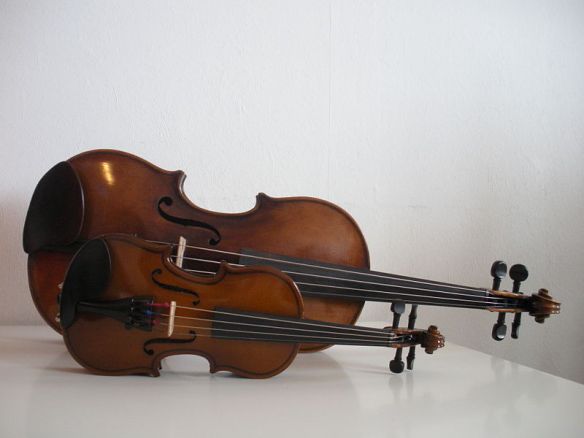
Violins come in the following sizes and total length:
1/16 – 37cm (14.5″); 1/10 – 41cm (16″);    1/8 – 44cm (17.5″); 1/4 – 48cm (19″);
1/2 – 52cm (20.5″);   3/4 – 55cm (21.5″); 7/8 – 57cm (22.5″); 4/4 – 59cm (23.5″).
Violins come is different sizes to suit different ages:
  • VIOLINS:
  • Age: 13-Adult 4/4 size (60cm)
  • Small Adult: 7/8 size (57cm)
  • Age: 10-12Yrs 3/4 size (55cm)
  • Age: 8-9Yrs 1/2 size (52cm)
  • Age: 6-7Yrs 1/4 size (48cm)
  • Age: 5-6Yrs 1/8 size (44cm)
  • Age: 4-5Yrs 1/10 size (41cm)
  • Age: 3-4Yrs 1/16 size (37cm)
  • VIOLA:
  • Age: Large Adult/ 16″-17″
  • Age: Average Adult/ 15.5″
  • Age: 10-12Yr, Small Adult/ 15″
  • Age: 9-12Yr 14″
  • Age: 7-9Yr 13″
  • Age: 6-7Yr 12″

Which Violin Wood sounds the best-European? Chinese?

Can you tell how a violin will sound just by looking at it? Maybe. What if you knew what wood it was made from? If it had a European spruce top, would it be a better sounding violin? What about Chinese violins which use Chinese wood? Can they sound as good as European violins? If you have wondered about these things please read on and explore with me how the wood used to make a violin can definitely guarantee a better sound. I will begin by outlining the three components which combine to make a great sounding violin:

Firstly, the WOOD that is used according to some violinmakers, is the most important reason for good sound, all other things being equal (which they never are).

Secondly, there is the CRAFTSMANSHIP of the violin maker, which in the opinion of others is the most important ingredient. One violin-maker, even claims that he can make a good sounding violin from any sample of spruce and maple. I have read enough of other violin-makers opinions to know that this statement is not true. Wood is just as important as the skill of the maker.

Thirdly, all violins require a SET-UP involving positioning the sound-post inside the violin, the shaping of a bridge and nut to the correct height, width and fit on the body.

In this article I am only talking about the wood that is used, and I plan to talk about the making and set-up of violins in future posts.

Regarding the WOOD used it is useful to know that the TOP of the violin is made from SPRUCE and is called the belly or the sound board. The BACK, the sides and the neck of the violin are made from MAPLE. The most important part of the violin for sound is undoubtedly, the spruce top or belly of the violin which is called the soundboard. The maple used elsewhere does effect the sound also, but in a complementary way.

Stradivari was very particular which individual spruce tree his spruce top came from. In his day, in the 17th century, all the finest violin makers like Amati, Stradivari, Guarneri etc. from Cremona (Italy) used spruce trees cut in the European alps and rafted to Venice and then brought to Cremona. This spruce is a specific species called picea abies. When and from where the tree was cut was very important. “WHEN it was cut down was very important! It had to be cut down within the last quarter of waning moon (end of waning moon phase) in the wintertime after the growing period of the tree has stopped” and the sap flow was low (www.best-eurospruce.com/3.html). Because of this it was called moon-spruce. WHERE it was felled was very important also: 1. the spruce had to come from was the European Alps which is shared by Germany, Switzerland, Italy and Austria;” 2. The tree had to face “the northwest slope of a mountain in altitudes from 1000 meter/3500 feet up to the limit of vegetation!” Here is an example of this:

Here are some more guidelines:

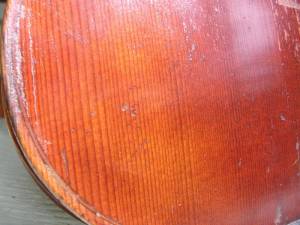
– the age of the tree effects the sound as more mature trees have a greater flexibility and resonance. You can tell the age of the tree by the close grain throughout the top. If the grain changes from close grain to wide grain, it is probably a younger tree. A mature trees can be as old as 300 years to achieve this consistent closeness of the grain width!

Below is a picture a good close grained top:

The picture below shows close grain in the centre but it the width of the grain varies significantly towards the edge:

– the spruce needs to have close, clearly visible grain lines which indicates that the spruce came from a high altitude where there is not much growth in the wood from year to year. This is why the grain is closer together. Trees from a higher altitude are stronger and more flexible when bent. As a result, the wood will return to its original shape when flexed due to its slow growth resulting in the close grain. The sound will therefore be more resonant due to the wood’s springiness.

– European tonewood is often thought to produce a better sounding violin. This is often true but not just because the wood is better, it is also because it costs more to buy so greater care is taken in the making of the violin and the setting up of the soundpost, bridge and strings. So, some spruce from the mountains in China can produce a good sounding violin if the spruce tree is at high altitude with slow growth and close grain! However, it is very unlikely to be the correct species of spruce so the sound will be different to the classic violin sound. There are at least 11 species of Spruce in China from which violins could be made and none of them are “picea abies”: (info from https://en.wikipedia.org/wiki/Spruce )

– spruce must be aged (let lie after felling) for 15-20 years before it is used to make a violin (not artificially dried in a kiln). However, most if not all beginner violins are made with wood that is not aged. Why aren’t all violins made from aged wood? Unfortunately, demand is outstripping supply, so many violin-makers in China are using wood from trees that are not even aged one year after being felled. The violins will look the same but the sound will be very different. With wood that is not aged, there will be a tight sound which lacks resonance and harmonics. Instead there is a harshness or squeakiness to the sound. I have found this to be true in the last few years as the sound quality of beginner violins has fallen dramatically. I am told that new wood will produce a sour smell, but the varnish can have such a strong smell that it is hard to smell the wood.

In conclusion, great care must be taken to obtain the best wood to make a musical instrument as demanding as a violin. In reality, however, when purchasing a violin we have no idea when the wood was cut or where exactly in Europe or China it comes from. The only way we can tell the altitude is by the closeness of the grain. The correct species of spruce is called “picea abies” which comes from Europe. The 0ther 34 species of spruce are probably used in most of the violins which are made in mass quantity today. So the sound will be different to the classic violin sound.

For those who are interested in more information about what spruce trees produce the best tonewood for violins please read the following information found at http://www.best-eurospruce.com/4.html

“Carpenters and luthiers had recognized that wood that was cut under certain conditions, differs from wood that is not cut using the old traditional rules: 

  • The best trees grow on the northwest slope of a mountain on altitudes from 1000 meter/3500 feet up to the limit of vegetation.
  • The best trees measure ca. 50 centimetres/ 20+ inch diameter and is around 300 years old due to its slow growth at high altitudes (that’s when a tree hits it’s peak).
    At these altitudes a tree grows around 1 millimetre/ 0.4 inch each year in radius = distance from the grain lines. Using a little mathematics it comes out to ca. 20 grain lines/inch.
  • Cut down within the last quarter of waning moon (end of waning moon phase) in the wintertime after the growing period of the tree has stopped (low sap flow). For this reason the spruce is called “moonspruce.”
  • Let this tree lie as it is in the forest for stabilization – including it’s branches and bark – until a first step of drying is done by nature and the cut tree tries to start to grow again after the end of wintertime (this is nowadays no more possible due to bark beetle plague).
  • Then bring it down to the mill, get split logs out of it and cut these into tonewood. Air-dry the milling results.” 

Regarding this traditional method the old violin masters like Stradivarius etc. said that moonwood has several advantages to non-moonwood. This wood is more resistant against moister changes and it is stiffer: some analysis say that it seems to be ca. 15% denser than a comparable piece of non-moonwood and it feels like long-time stored wood that has reached a stable state. According to some luthiers, a 1-year-stored moonwood top feels and compares to a 15-year-stored non-moonwood.

Violins as Carry-on Luggage aboard Airplanes

Can we carry our Violins with us inside the Airplane as Carry-On Luggage?

Answer: It depends on which country and which airline. In the E.C. as well as most of the world it is airline specific.

Before we start let’s ask ourselves “how big is a violin and how big is a violin case?”

The full-sized VIOLIN itself is 59-60cm in length, while the VIOLIN CASES can vary from around 61cm (without bow) to 80cm. Viola’s can vary even more depending on the size of the viola!

AIRLINES: Some airlines like Ireland’s Ryanair only allow the maximum dimensions of 55cm x 40cm x 20cm. This is really small as just the violin itself is 59-60cm long! There is no way you could bring your violin on board unless you cut off the peg box!

Qantas are more accommodating allowing L81cm x H30cm x D19cm for Music instruments as inflight hand baggage. This means your violin case at 80cm length can be allowed as carry-on baggage.

COUNTRIES: In the U.S.A., there is now a nation wide policy because of legislation which was just passed in their Senate on February 6th, 2012. For more information I have included excerpts from the following article at http://www.violinist.com

U.S. Congress says instruments will be allowed as airplane carry-ons!

News: Good news for those of us who travel with our instruments.

From Laurie Niles (from http://www.violinist.com)
Posted February 9, 2012 at 03:33 AM

The new Federal Aviation Administration (FAA) just passed by the U.S. Congress allows instruments as carry-on luggage.  The FAA reauthorization was passed by the House of Representatives on Friday, February 3 by a 248-169 vote.

Here are excerpts from the American Federation of Musicians (AFM) press release: The AFM applauds the passage of the FAA Bill that sets a consistent national policy allowing musical instruments on airplanes.

Congress has passed legislation reauthorizing the Federal Aviation Administration (FAA) for the next four years. Included in the bill are provisions that create a uniform national policy regarding musical instruments on airplanes. Any instrument that can be safely stored in the overhead compartment or underneath the seat may be brought on board as carry-on luggage. Additionally, the bill sets standard weight and size requirements for checked instruments, and permits musicians to purchase a seat for oversized instruments, such as cellos, that are too delicate to be checked. Existing law allowed each airline to set their own policy regarding musical instruments, and size requirements varied widely for both carry-on and checked baggage. “This is great news for professional musicians throughout the U.S. and Canada who carry the tools of our trade – our instruments – aboard commercial aircraft,” said AFM President Ray Hair. “Ending the confusion over musical instruments as carry-on baggage has been a top legislative priority for nearly a decade.”

WHY YOU DON’T WANT TO CHECK YOUR MUSICAL INSTRUMENT INTO THE BAGGAGE COMPARTMENT: sometimes luggage is tossed and roughly handled which is demonstrated in the picture below. This is not a real event, but it is a remake of an event which resulted in the breaking of the guitar of the singer Dave Carroll. For the song you can go to http://www.youtube.com/watch?v=5YGc4zOqozo&feature=player_embedded#!

Mandolin in Sydney

ABOUT THE MANDOLIN: For those violinists reading this, you may not know that Mandolin is a near relative of the violin. If the violin was the mother and the guitar was the father, then the Mandolin would be their son or daughter!!!

How is it possible you ask? Take a violin neck, tuning and strings, add frets and put it on a miniature guitar body and voila! – out pops a Mandolin. Now that makes the mandolin incredibly easy for a violinist to learn if you can “pluck” up the courage to put down your bow and “pick” up a plectrum (otherwise known as a pick).

HOW I LEARNT THE MANDOLIN: Other than playing classical music I have been known to belt out a few fiddle tunes in my day. I first became interested in the mandolin while I was fiddling Irish and Australian jigs and reels in my student days. The guitarist in the folk band had a mandolin he used for the folk melodies. He and I were both surprised that the first time I picked up a mandolin, I could play any music he put in front of me! What a pleasant surprise! Even better, he gave me his mandolin on my next birthday -thanks Dave!

If you can play both violin and guitar then guess what? You can play the mandolin! No serious practice needed

THE MANDOLIN is NOT a UKULELE!!!

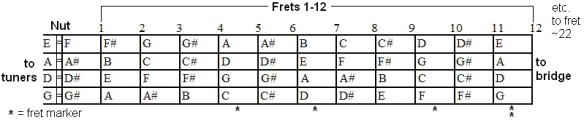
– this might be stating the obvious, but they are not the same and here is why: a Mandolin has 8 metal strings tuned like a violin: GGDDAAEE (from low to high strings)

mandolin_fretboard

WHEREAS, a Soprano UKULELE has 4 nylon strings tuned like a guitar but five notes lower: GCEA (from low to high strings). The 4 strings are tuned exactly five notes lower than the 4 highest strings of the guitar. So instead of E as the highest string, the Ukulele has A which is 5 notes lower etc.

HISTORY OF THE MANDOLIN: The Mandolin is actually a very historic instrument dating back to the 14th Century when it was called the Mandore!

The following is extracted from Wikipedia:

Mandolins evolved from the lute family in Italy during the seventeenth and eighteenth centuries, and the deep bowled mandolin, produced particularly in Naples, became common in the nineteenth century. The original instrument was themandore, which evolved in the fourteenth century from the lute. This mandore was the soprano lute.

mandolin (Italian: mandolino) is a musical instrument in the lute family (plucked, or strummed). It descends from the mandore, a soprano member of the lute family. The mandolin soundboard (the top) comes in many shapes—but generally round or teardrop-shaped, sometimes with scrolls or other projections. A mandolin may have f-holes, or a single round or oval sound hole.

Modern mandolins with a round back, originated in Naples, Italy in the late 18th century. They have four pairs of metal strings, which are plucked with a plectrum.

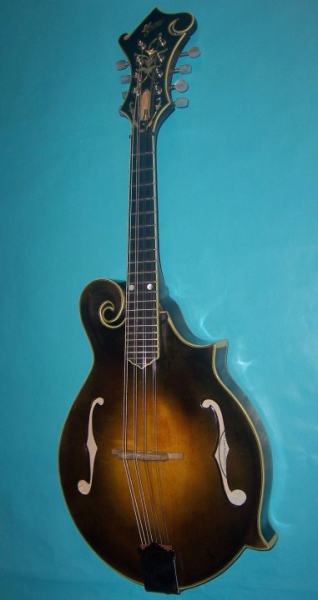
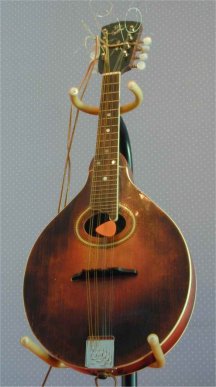
At the very end of the 1800’s, a new style, with a carved top and back construction inspired by violin family instruments began to supplant the European-style bowl-back instruments, especially in the United States. This new style is credited to mandolins designed and built by Orville Gibson, a Kalamazoo, Michigan luthier who founded the “Gibson Mandolin-Guitar Manufacturing Co., Limited” in 1902. Gibson mandolins evolved into two basic styles: the Florentine or F-style, which has a decorative scroll near the neck, two points on the lower body, and usually a scroll carved into the headstock; and the A-style, which is pear shaped, has no points, and usually has a simpler headstock.

These styles generally have either two f-shaped soundholes like a violin (F-5 and A-5), or an oval sound hole (F-4 and A-4 and lower models) directly under the strings. Generally, Gibson F-hole F-5 mandolins and mandolins influenced by that design are strongly associated with American bluegrass music, while the A-style is more associated with Irish, folk, or classical music.

A photo of the F-hole F-5 mandolin  is pictured at the top of this page.

Below is a picture of the A-style mandolin: